

A good time to consider wisdom teeth removal is when you experience persistent pain, swelling, or difficulty cleaning the back of your mouth, or when X-rays reveal impaction, crowding, or decay.
If you’re wondering whether it’s time to address your wisdom teeth, you’re asking the right question at hopefully the right time. The difference between proactive and reactive wisdom tooth management often determines whether you’ll have a simple 20-minute procedure or a complex surgical extraction that costs 4x more.
Let’s give you the complete framework for making this decision with confidence, so you never have to wonder if you’re doing the right thing.
Key Takeaways
– Age 18 vs 28 changes everything about your experience
– “Wait and see” is the costliest mistake people make
– 85% miss the optimal extraction window entirely
– Prevention beats emergency treatment every time
– Your body broadcasts 9 clear warning signals
Age 18 vs 28: Changes Everything About Your Experience
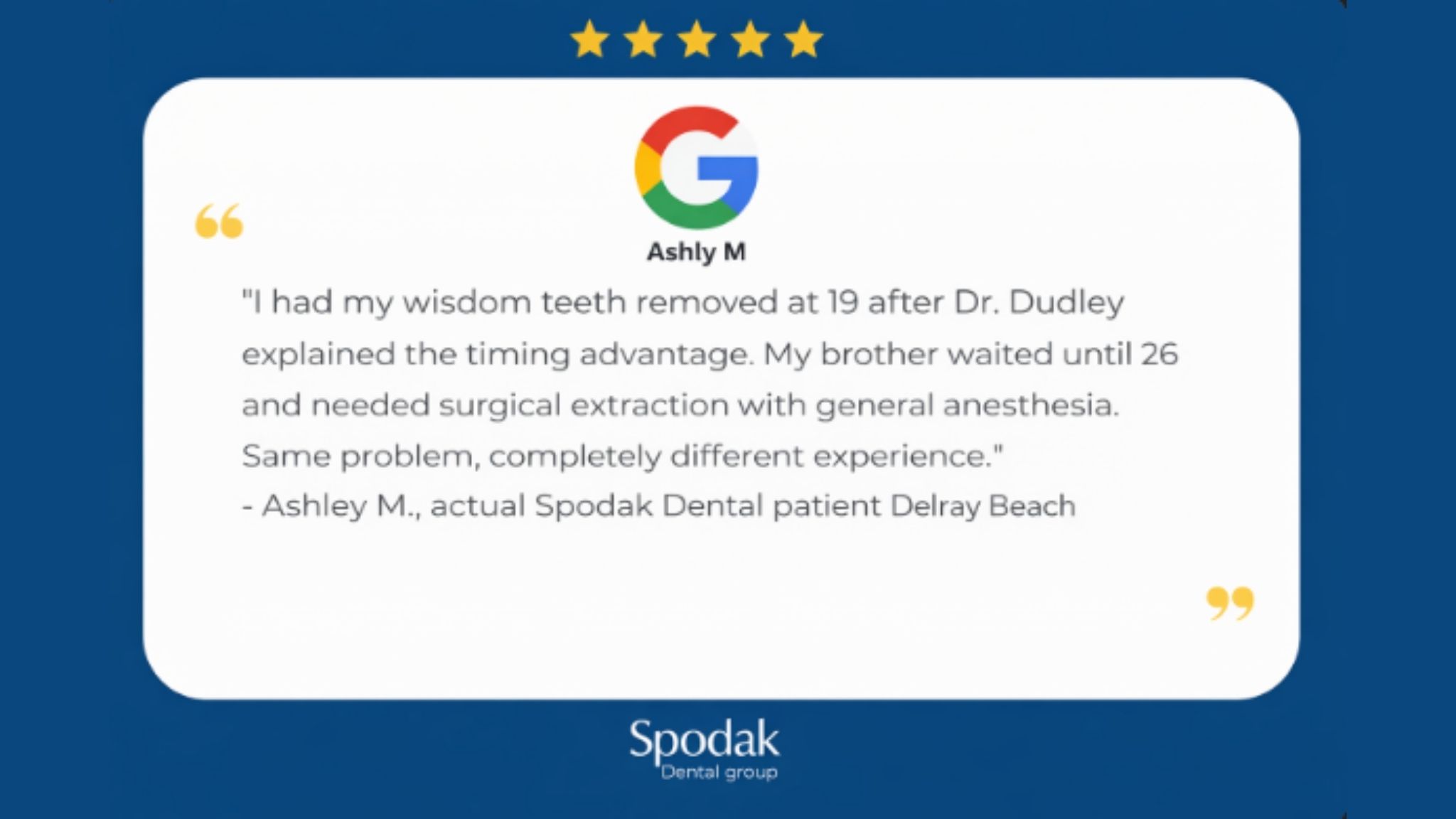
Here’s the biological reality that changes everything: wisdom tooth removal at 18 versus 28 isn’t just about convenience, it’s about fundamentally different procedures with dramatically different outcomes.
At 18, wisdom tooth roots are typically two-thirds formed, making extraction straightforward with minimal bone removal required. The surrounding bone is less dense, healing happens faster, and complications are rare.
At 28, those same roots are fully developed and often curved around nerves and sinuses.
The bone has hardened significantly, requiring more aggressive surgical techniques. Recovery takes longer, and the risk of nerve damage or sinus complications increases substantially.
The numbers tell the story: Strategic removal at the optimal age typically costs $400-800 per tooth with 3-5 days recovery. Waiting until problems develop often means $1,500-3,000 per tooth with 2-3 weeks recovery time.
“Wait and See” Is the Costliest Mistake People Make
The “wait and see” approach feels logical. Why fix something that isn’t broken? But this thinking ignores the predictable progression of wisdom tooth problems and the exponential increase in complexity over time.
Here’s what’s really happening when people delay: your brain’s loss aversion bias makes immediate discomfort feel worse than future consequences.
You’re wired to avoid today’s minor inconvenience while underestimating tomorrow’s major problems.
The biological reality: Modern human jaws are 20% smaller than our ancestors’, but wisdom teeth haven’t adapted. Your mouth is designed for 28 teeth, not 32. When wisdom teeth emerge, they’re competing for space that simply doesn’t exist.
This creates a predictable cascade: inadequate space leads to impaction, impaction leads to infection risk, infection leads to damage of adjacent healthy teeth. Each stage multiplies the complexity and cost of treatment.
The economic reality: Preventive removal costs a fraction of emergency intervention. More importantly, you control the timing, the provider, and your recovery schedule instead of being forced into crisis mode.
85% Miss the Optimal Extraction Window Entirely
The optimal wisdom tooth removal window exists between ages 16-20, when roots are two-thirds formed but before full development creates surgical complications. Miss this window, and you’re not just facing higher costs, you’re dealing with exponentially more complex procedures.
Why this window matters: During these years, wisdom tooth removal is typically a straightforward extraction rather than oral surgery. The healing process is faster, complications are minimal, and you can schedule the procedure around your life rather than having your life disrupted by dental emergencies.
The strategic advantage: Acting during this window means you have options. You can choose your provider based on expertise and comfort rather than availability. You can schedule around school, work, or life events. You can take advantage of insurance benefits when you have them rather than scrambling during emergencies.
Most people wait until pain forces action, but pain is actually a late-stage symptom. By the time wisdom teeth hurt, you’re often dealing with infection, damage to adjacent teeth, or complex impaction that requires surgical intervention.
Prevention Beats Emergency Treatment Every Time
Strategic wisdom tooth management versus emergency intervention isn’t just about cost, it’s about controlling your experience rather than being controlled by circumstances.
Prevention means choice: You choose the timing based on your schedule, your provider based on expertise and comfort, and your approach based on your preferences. You can plan time off work, arrange childcare, and prepare for recovery.
Emergency treatment means crisis: You’re limited to whoever has availability, forced to take time off at inconvenient moments, and dealing with more complex procedures because problems have escalated beyond simple solutions.
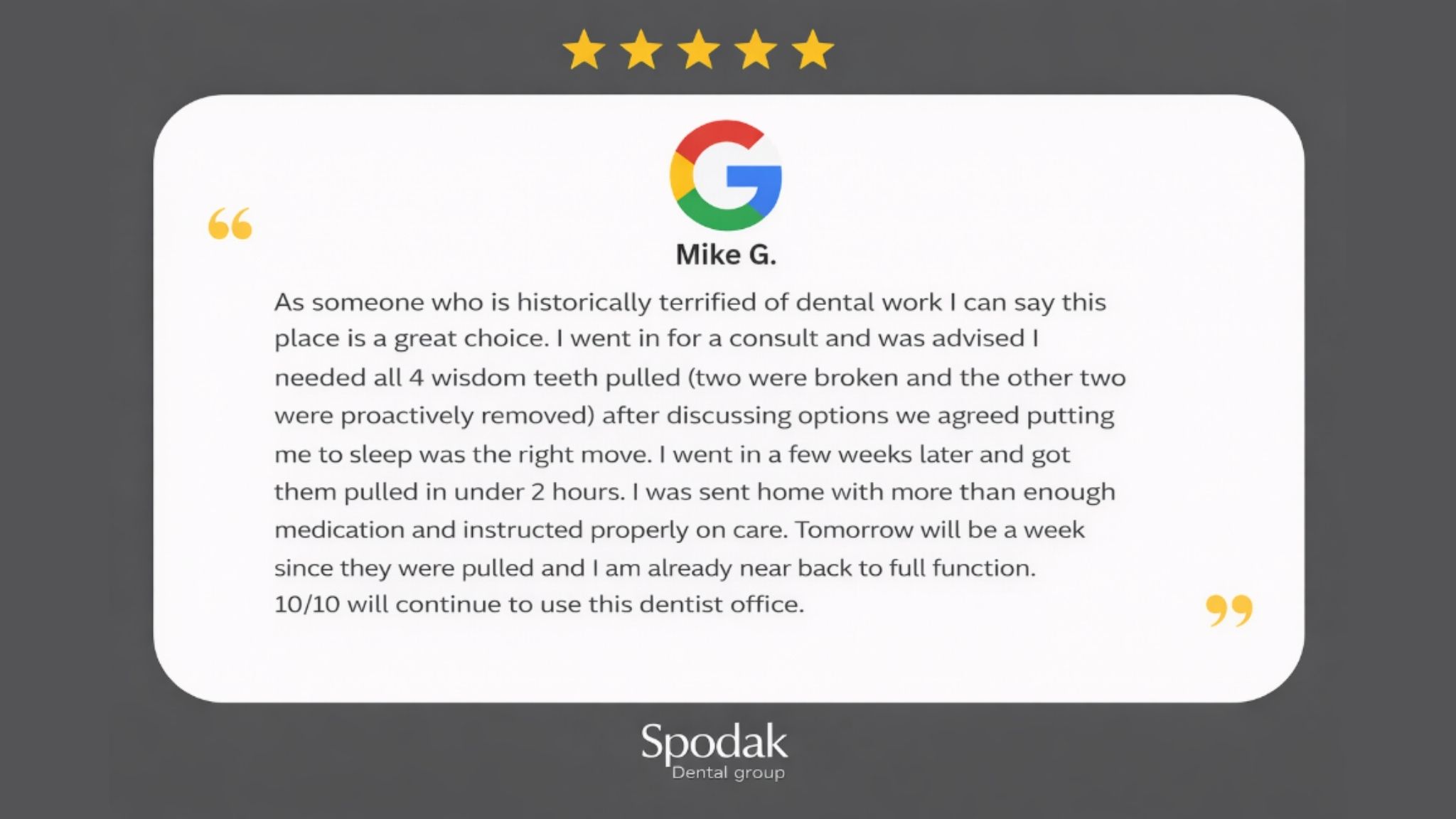
The biological advantage of early intervention is significant. Before complications develop, wisdom tooth removal typically involves:
– Simple extraction techniques rather than oral surgery
– Local anesthesia rather than general anesthesia
– Outpatient procedures rather than hospital-based surgery
– 3-5 day recovery rather than 2-3 week healing periods
The compounding effect: Early removal prevents damage to adjacent healthy teeth, eliminates hard-to-clean areas that trap bacteria, and stops the domino effect of dental problems that often follow untreated wisdom tooth issues.
Your Body Broadcasts 9 Clear Warning Signals
Your body provides clear early warning signals before wisdom tooth problems become serious. Learning to recognize these indicators helps you stay ahead of complications rather than reacting to crises.
Persistent Jaw Pain (Especially at Night)
This isn’t occasional discomfort; it’s your nervous system signaling that pressure is building beyond normal parameters. When pain wakes you up or persists despite over-the-counter pain relievers, your wisdom teeth are creating pressure that will only increase over time.
What this means: Your wisdom teeth are likely impacted or severely malpositioned. The surrounding tissue is being compressed, creating inflammation that interferes with normal function.
Recurring Gum Inflammation Around Back Molars
Red, swollen gums around your back teeth indicate your immune system is fighting a losing battle against bacteria in areas you cannot effectively clean. Each episode of inflammation creates more tissue damage than the last.
The progression: Bacteria accumulate in hard-to-reach areas → immune system responds with inflammation → swelling makes cleaning even more difficult → bacterial overgrowth accelerates.
Persistent Bad Breath Despite Excellent Hygiene
When good oral hygiene doesn’t eliminate bad breath, you’re dealing with bacterial colonies in areas your toothbrush and floss can’t reach. These bacteria release sulfur compounds that create persistent odor no amount of mouthwash can mask.
The underlying problem: Wisdom teeth create pockets and crevices that trap food particles and bacteria. Once established, these bacterial colonies are virtually impossible to eliminate without addressing the structural problem.
Tooth Decay in Hard-to-Clean Areas
Wisdom teeth become magnets for plaque because they’re positioned where your cleaning tools can’t reach effectively. The decay doesn’t stop at wisdom teeth, it spreads to adjacent healthy molars, turning a single-tooth problem into a multi-tooth crisis.
The cascade effect: Decay on wisdom teeth → bacteria spread to adjacent teeth → what started as one problematic tooth becomes multiple teeth needing treatment.
Teeth Shifting After Orthodontic Treatment
Pressure from emerging wisdom teeth can undo years of orthodontic work. This is particularly frustrating for people who’ve invested time and money in achieving straight teeth, only to watch them shift back toward crowding.
The investment protection: Removing wisdom teeth before they create pressure protects your orthodontic investment and maintains the alignment you worked to achieve.
When opening your mouth becomes restricted or painful, inflammation has spread to the muscles and tissues surrounding your jaw joints. Your body is protecting the affected area by limiting movement, a clear sign that conservative management isn’t working.
Sinus Pressure and Headaches
Upper wisdom teeth sit adjacent to your sinus cavities. When impacted, they create pressure that manifests as “sinus” symptoms that don’t respond to typical sinus treatments. These headaches often worsen when bending over or lying down.
Pain When Eating
When basic biological functions like chewing become painful, you’re dealing with advanced problems that will escalate quickly. This typically progresses from occasional sensitivity to inability to eat normally on the affected side.
Crowding and Bite Changes
Wisdom teeth pushing against existing teeth create crowding that affects both appearance and function. Crowded teeth are harder to clean effectively, creating new areas for bacterial accumulation and increasing your overall risk of dental problems.
“I had three of these warning signs but kept putting off the consultation. Dr. Arauz showed me exactly how the problems were connected and what would happen if I continued waiting. The extraction was so much easier than I expected.” – Jennifer K., actual Spodak Dental patient
Experiencing any of these warning signs? Don’t wait for complications to develop. Call or text (561) 303-2413 to schedule your evaluation.
Frequently Asked Questions
Do all wisdom teeth need to be removed?
Not every wisdom tooth requires removal, but the vast majority do because most people lack adequate jaw space for proper wisdom tooth function.
The determining factors include available space, tooth positioning, your ability to clean them effectively, and their impact on adjacent teeth.
For wisdom teeth to stay, they need to be properly positioned, fully erupted, cleanable with normal oral hygiene, and not creating pressure on other teeth. Unfortunately, modern jaw size rarely accommodates these requirements. Even when wisdom teeth initially appear fine, they often create problems over time as spaces become harder to clean and bacterial accumulation increases.
The best way to determine if you need your wisdom teeth removed is to be seen for a consultation! The strategic approach involves professional evaluation of your specific anatomy using panoramic X-rays that show not just current positioning but predicted future development.
This allows for informed decision-making based on your individual situation rather than general assumptions.
What’s the optimal age for wisdom tooth removal?
The optimal removal window is typically between ages 16-20, assuming removal is anticipated based on professional evaluation. This timing maximizes biological advantages while minimizing surgical complexity and recovery time.
During this age range, wisdom tooth roots are usually two-thirds formed but not fully developed, making extraction more straightforward.
The surrounding bone is less dense, healing happens faster, and complications are significantly less likely. Additionally, younger patients typically recover more quickly from any dental procedure.
Waiting beyond age 25 often means dealing with fully formed roots that may be curved around nerves or extend into sinus cavities, requiring more complex surgical techniques. The bone becomes denser with age, making extraction more difficult and recovery longer.
How long is recovery from wisdom tooth removal really?
Recovery time depends primarily on the complexity of the extraction and when you address the problem. Strategic removal during the optimal window typically means 3-5 days return to normal activities with minimal complications.
However, waiting until problems develop often requires surgical extraction with significantly longer recovery periods, typically 2-3 weeks, with potential for complications like dry socket, infection, or nerve irritation. The difference isn’t just time; it’s the quality of your recovery experience.
Planning ahead allows you to schedule removal when it’s convenient for your life, arrange adequate time off, and prepare properly for healing. Emergency extractions force you to recover during whatever time you can manage, often during stressful periods when healing is compromised.
What happens if I ignore wisdom tooth problems?
Ignoring wisdom tooth problems creates a predictable escalation of complications that become exponentially more expensive and complex to treat. What starts as a simple extraction often becomes a surgical intervention requiring specialist care.
The typical progression involves increasing pain, infection risk, damage to adjacent healthy teeth, and potential for serious complications like cysts or nerve damage.
Each stage multiplies both the complexity and cost of treatment while reducing your options for conservative management. Beyond the immediate dental consequences, untreated wisdom tooth problems can affect your overall health, work productivity, and quality of life.
Chronic pain and infection risk create stress that impacts sleep, nutrition, and general well-being.
Why should I choose Spodak Dental Group for wisdom tooth evaluation?
Spodak Dental Group combines advanced diagnostic technology with comprehensive expertise to give you the complete picture of your wisdom tooth situation. Our 3D imaging provides detailed surgical planning that optimizes outcomes and minimizes complications.
We have board-certified anesthesiologists available for maximum comfort during procedures, and our team approach means you’re getting coordinated care from specialists who work together daily. This collaboration ensures you receive the most appropriate treatment for your specific situation.
Our track record speaks for itself, as we’ve helped thousands of patients in South Florida navigate wisdom tooth decisions with confidence. The consultation process is thorough but efficient, giving you the information you need to make the best decision for your situation. Ready to get the clarity you need about your wisdom teeth?
Call or text to schedule your comprehensive evaluation. Don’t let uncertainty about your wisdom teeth create unnecessary stress. Schedule your consultation today and get the roadmap for your optimal oral health. Your future self will thank you for taking action now.


 Patient Forms
